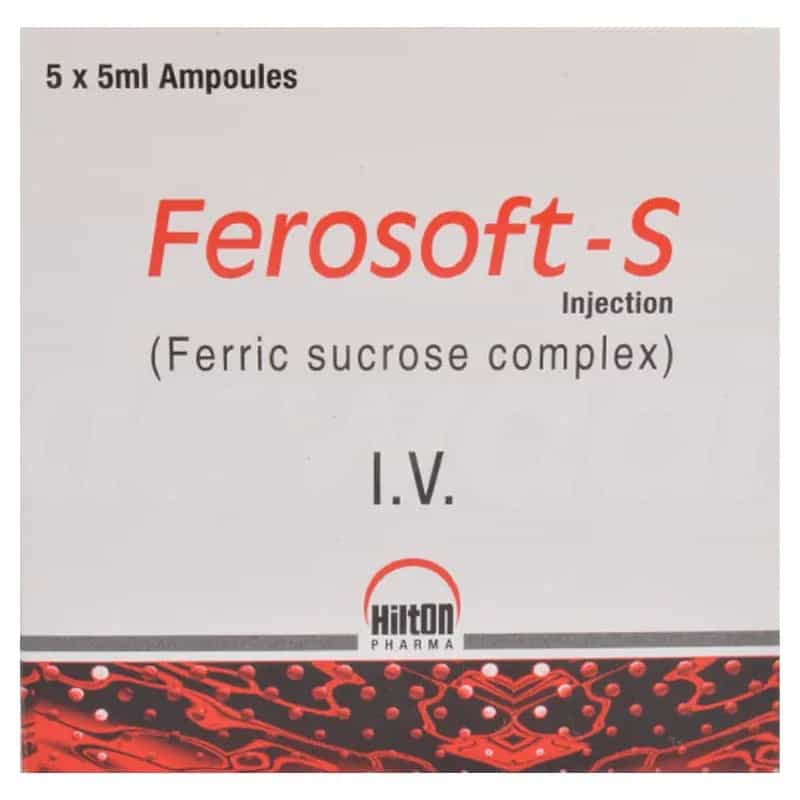
Hilton Pharma
Iron sucrose is an iron preparation given into a vein by a nurse or doctor. It is used when iron tablets cannot be taken, are not absorbed, or cannot raise the blood count fast enough.
Iron deficiency anaemia in people who cannot tolerate or absorb oral iron, including in chronic kidney disease and on dialysis, in inflammatory bowel disease, after surgery or heavy bleeding, and in late pregnancy when time is short.
The iron is carried in a sucrose complex that the body's scavenger cells take up in the liver, spleen and bone marrow. They release the iron onto transferrin, the protein that delivers it to the marrow, so haemoglobin can be built without the iron ever passing through the gut.
A metallic taste, headache, nausea, low blood pressure, muscle or joint aches, and pain or discolouration at the injection site. Symptoms can appear a day or two after the dose and settle on their own.
Iron sucrose must only be given in a setting with staff and equipment to treat a severe allergic reaction, and the patient is watched for at least half an hour after each dose. It is not given to people with iron overload or anaemia not caused by iron deficiency. Tell the team about asthma, eczema, other allergies or any previous reaction to an iron injection. It is a hospital or clinic medicine, not one to be used at home.